
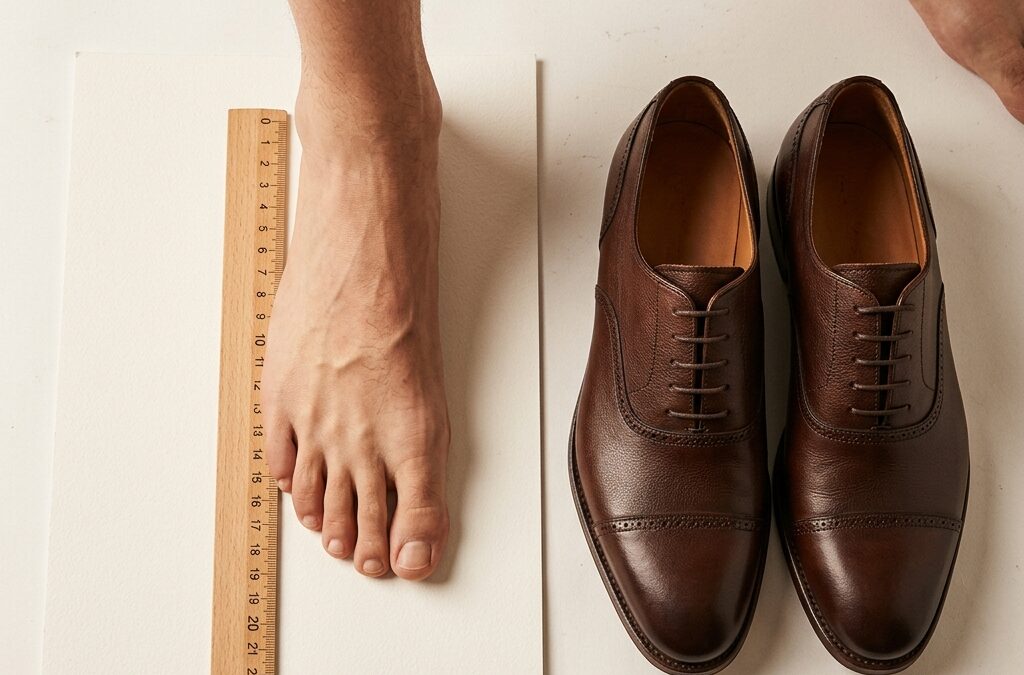
- Measure your feet in the evening for the most accurate sizing
- Always measure both feet and use the larger foot measurement
- Use centimetres, not arbitrary size numbers, for cross-brand accuracy
- Width is the most overlooked sizing factor and it determines 60% of comfort
- Re-measure annually because adult feet change shape over time
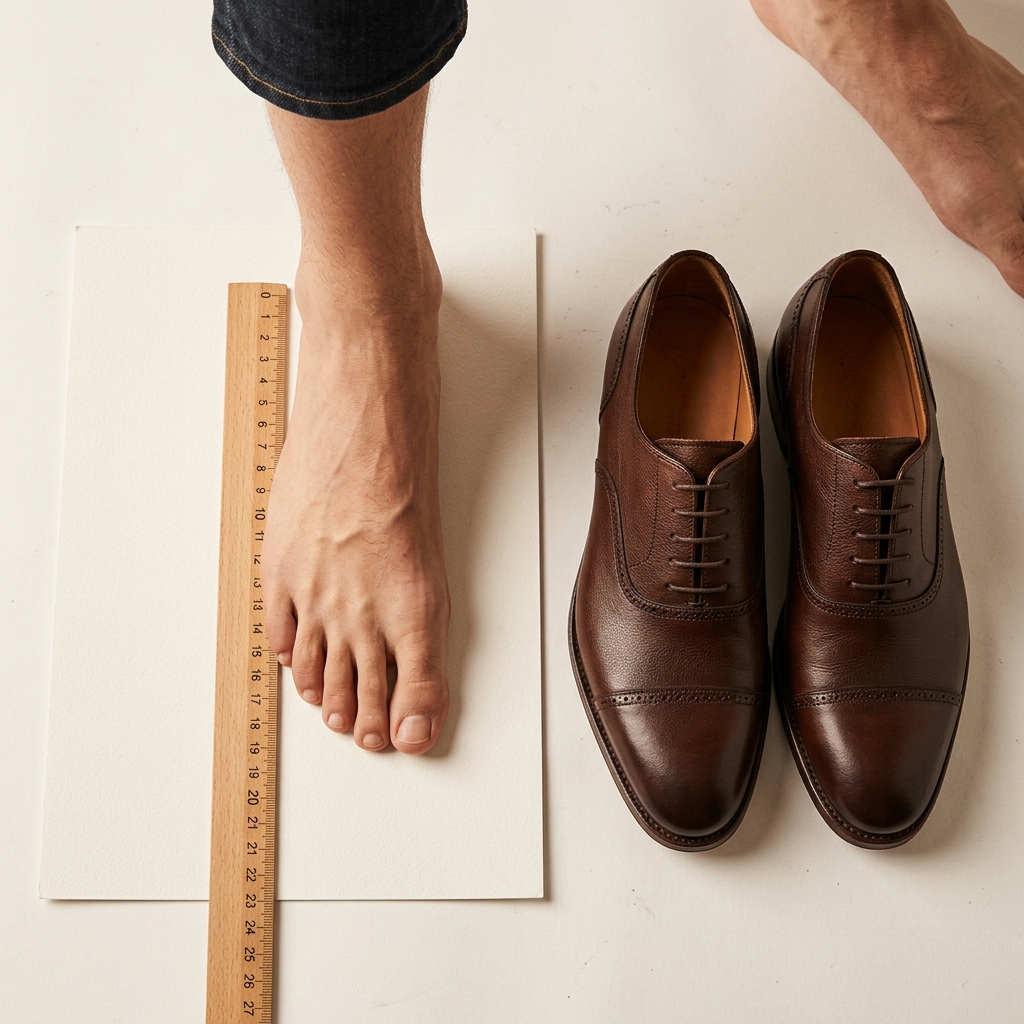
Purchasing footwear online or from a new brand presents a challenge that every shopper has faced: selecting the correct size. At Shoe Stop, we have fitted thousands of customers across our mens, womens, and childrens collections, and we can state with certainty that the majority of people are wearing the wrong shoe size. Industry research consistently indicates that up to 70% of consumers wear shoes that do not properly fit their feet, a statistic that leads to discomfort, returns, and in severe cases, lasting foot health complications.
This guide exists to end that cycle. Whether you are purchasing dress shoes for a formal occasion, running trainers for your morning routine, or school shoes for a growing child, the principles of how to choose the right shoe size remain consistent. What follows is the methodology that Shoe Stop footwear specialists use every day, distilled into a comprehensive resource you can apply from the comfort of your home.
Contents
- 1 Why Most People Are Wearing the Wrong Shoe Size
- 2 How to Measure Your Foot Size at Home: A Step-by-Step Method
- 3 Understanding Shoe Size Conversion: UK, US, EU, and CM
- 4 Sizing Considerations That Differ for Men, Women, and Children
- 5 The Shoe Stop Fit Test: Five Checks Before You Commit
- 6 Common Sizing Mistakes and How to Avoid Them
- 7 Frequently Asked Questions
- 8 Conclusion
Why Most People Are Wearing the Wrong Shoe Size
The root of the problem is assumption. Most adults were last measured for shoes in their teenage years, and they have carried that size forward for decades without question. This approach ignores a fundamental biological reality: the human foot is not a static structure. The 26 bones, 33 joints, and more than 100 tendons in each foot shift and adapt over time due to weight fluctuations, pregnancy, ageing, and the cumulative impact of years of walking on various surfaces.
At Shoe Stop, we regularly encounter customers who have been wearing a size 8 for twenty years, only to discover upon measurement that they are now a size 9 or even a 9.5 with a wider foot profile. The consequences of this mismatch extend beyond mere discomfort. Ill-fitting footwear is a leading contributor to bunions, plantar fasciitis, hammertoes, and chronic lower back pain. Choosing the right shoe size is not a matter of convenience, it is a matter of long-term health.
Another critical factor is the absence of a universal sizing standard. A size 42 in a European brand, a size 8 in a UK brand, and a size 9 in an American brand may all refer to slightly different foot lengths depending on the manufacturer last (the three-dimensional mould around which the shoe is constructed). This inconsistency makes it essential to measure your foot in centimetres and consult each brand specific conversion chart rather than relying on a generic size number.
How to Measure Your Foot Size at Home: A Step-by-Step Method
Accurate foot measurement requires minimal equipment but careful attention to technique. The following method is the same process that professional shoe fitters use, adapted for home use. You will need a blank sheet of A4 paper, a pen or pencil, a ruler or measuring tape, and a flat, hard surface such as a tile or hardwood floor.
Measuring Foot Length
- Time your measurement correctly. Measure your feet in the evening, ideally after a full day of standing or walking. Feet swell by as much as 5 to 8 percent during the course of a day due to fluid accumulation and gravitational pressure. Evening measurements capture your foot at its largest, ensuring the shoes you select will remain comfortable throughout the entire day.
- Prepare your surface. Place the sheet of paper on a hard, flat floor and tape it down so it does not shift. Position one edge of the paper flush against a wall.
- Stand and trace. Wear the type of socks you intend to use most frequently with your new footwear. Stand on the paper with your heel lightly touching the wall. Distribute your weight evenly across both feet. Do not sit during this process, as sitting compresses the foot and produces an inaccurately small measurement.
- Mark the longest point. Have someone hold a pen or pencil perpendicular to the floor at a 90 degree angle and mark the tip of your longest toe. Note: for approximately 20 percent of the population, the second toe is longer than the big toe. Always measure from the longest toe, regardless of which one it is.
- Measure the distance. Remove your foot and measure the distance from the wall edge to the toe mark in centimetres. Record this number to the nearest millimetre.
- Repeat for both feet. It is entirely normal for one foot to be 5 to 10 mm longer than the other. Always use the measurement from the larger foot when selecting your size.
Measuring Foot Width: The Factor Most Shoppers Overlook
Length alone does not determine proper fit. Foot width is responsible for approximately 60 percent of how comfortable a shoe actually feels during extended wear, yet it is the measurement most frequently ignored by consumers shopping without professional guidance.
To measure width, stand on the paper as before and mark the widest point on each side of your foot, typically at the ball of the foot, where the base of the big toe and the base of the little toe create the widest span. Measure the horizontal distance between these two marks. Compare this measurement against the brand width chart, which will typically categorise widths as Narrow (N or AA), Standard (M or D), Wide (W or EE), or Extra Wide (EEE or 4E).
At Shoe Stop, we stock multiple width options across our collections because we recognise that a standard-width shoe forced onto a wide foot creates pressure points, restricts circulation, and accelerates fatigue. Conversely, a narrow foot in a wide shoe leads to heel slippage, instability, and an increased risk of ankle injuries.
Understanding Shoe Size Conversion: UK, US, EU, and CM
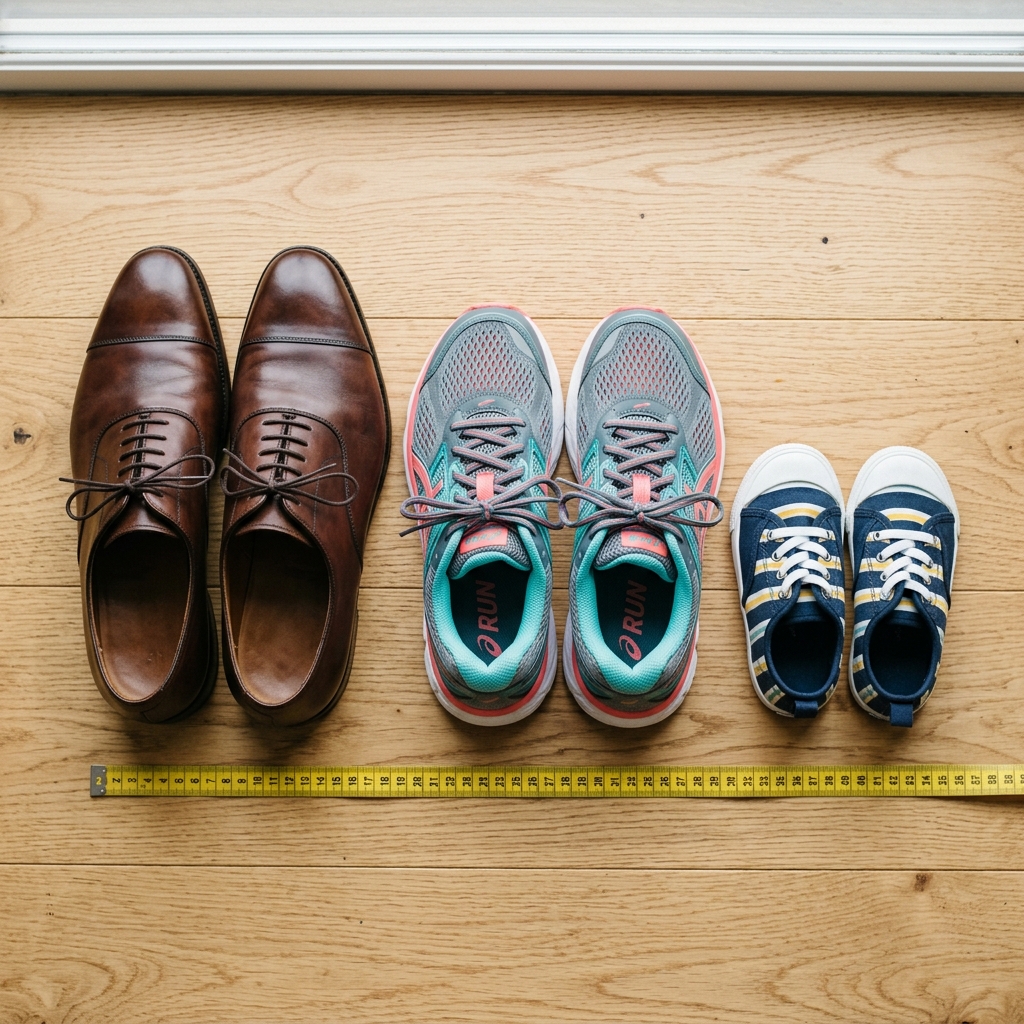
One of the most common sources of sizing errors is incorrect conversion between regional sizing systems. The following table provides a general reference, but we must emphasise that brand-specific charts should always take precedence over generic conversion tables.
| Foot Length (CM) | UK Size | US Mens | US Womens | EU Size |
|---|---|---|---|---|
| 24.5 | 6 | 7 | 8.5 | 39.5 |
| 25.0 | 6.5 | 7.5 | 9 | 40 |
| 25.5 | 7 | 8 | 9.5 | 41 |
| 26.0 | 7.5 | 8.5 | 10 | 41.5 |
| 26.5 | 8 | 9 | 10.5 | 42 |
| 27.0 | 8.5 | 9.5 | 11 | 42.5 |
| 27.5 | 9 | 10 | 11.5 | 43 |
| 28.0 | 9.5 | 10.5 | 12 | 44 |
The most reliable approach, and the one we advocate at Shoe Stop, is to bypass arbitrary size numbers entirely and use your centimetre measurement against the brand specific chart. Centimetres are a universal, objective unit, a size number is not.
Sizing Considerations That Differ for Men, Women, and Children
While the measurement technique remains the same regardless of age or gender, there are important nuances that Shoe Stop fitting specialists account for when advising different customer segments.
Mens Footwear Sizing
Mens feet tend to be broader on average, and men are more likely to require wide or extra-wide fittings, particularly in formal shoes and work boots where stiffer materials offer less give. Leather dress shoes, for example, will typically stretch by 2 to 3 mm in width over the first few weeks of wear but will not stretch in length. This means initial length accuracy is non-negotiable, whereas width can be modestly accommodated by the material natural break-in period.
Womens Footwear Sizing
Womens sizing introduces additional complexity because heel height fundamentally changes how the foot sits inside the shoe. A flat sandal and a 75 mm heeled pump may both be labelled the same size, but the foot weight distribution shifts dramatically with elevation. In heeled footwear, the foot slides forward, making adequate toe box depth and width even more critical. At Shoe Stop, we recommend that women who frequently wear heels measure their feet while standing on tiptoe to simulate the in-shoe position.
Childrens Footwear Sizing
Childrens feet grow rapidly, as much as two full sizes per year between the ages of three and six. This growth rate demands that parents measure their children feet at least every two to three months. The temptation to purchase shoes with room to grow is understandable from a budget perspective, but a shoe that is more than one size too large creates tripping hazards and interferes with natural gait development. Our recommendation is to allow no more than 15 mm of extra space beyond the longest toe for childrens shoes.
The Shoe Stop Fit Test: Five Checks Before You Commit
Once you have selected a pair based on your measurements, apply these five verification checks that our in-store specialists perform on every fitting. These checks work whether you are trying shoes on in a shop or evaluating a delivery at home.
- The Thumb Test: With the shoe on and your foot flat on the ground, press your thumb against the front of the shoe above your longest toe. There should be approximately one thumb width (10 to 12 mm) of space. Less than this indicates the shoe is too short; significantly more suggests it is too long.
- The Heel Check: Slide one finger between your heel and the back of the shoe. It should fit snugly but not force its way in. If your finger slides in easily, the shoe is too large and you will experience heel slippage during walking.
- The Width Squeeze: Pinch the upper material at the widest point of your foot. If you can gather a significant amount of material, the shoe is too wide. If you cannot pinch any material at all, it is too narrow.
- The Walking Test: Walk at least 20 steps on a hard surface. Pay attention to any pressure points, rubbing at the heel, or your toes pressing against the front. Discomfort during the first walk will not improve, it will worsen.
- The Evening Revisit: If possible, try the shoes again in the evening when your feet are at their largest. A shoe that felt perfect at 10 AM may feel restrictive by 6 PM.
Common Sizing Mistakes and How to Avoid Them
In our decades of experience at Shoe Stop, we observe the same sizing errors repeatedly. Here are the most consequential mistakes and the expert corrections for each.
Relying on a single size across all brands. As discussed, there is no universal sizing standard. Always consult the specific brand size chart using your centimetre measurement. What works in one brand may be entirely wrong in another.
Ignoring width entirely. A shoe can be the perfect length and still cause significant pain if the width is wrong. Customers with wider feet who force themselves into standard-width shoes are the most common source of returns at Shoe Stop. If standard-width shoes consistently feel tight across the ball of your foot, you need a wide fitting, not a longer size.
Measuring while seated. Standing engages your body weight, which spreads the foot and flattens the arch. A seated measurement can underestimate your foot length by 5 to 8 mm, enough to place you in an entirely wrong size.
Using old measurements. If you have not measured your feet in the past 12 months, your previous size data is unreliable. Feet change. Measure annually at minimum.
Frequently Asked Questions
Should I measure my feet in the morning or evening?
Always measure your feet in the evening. Feet naturally swell throughout the day due to gravity and activity, and evening measurements reflect the largest your feet will be. Choosing a shoe size based on morning measurements often results in footwear that feels uncomfortably tight by the afternoon. At Shoe Stop, all of our in-store fittings follow this principle.
What should I do if I am between two shoe sizes?
If you fall between two sizes, always select the larger size. A shoe that is marginally too large can be adjusted with insoles or thicker socks, whereas a shoe that is too small will cause discomfort, blisters, and long-term foot health issues. At Shoe Stop, we recommend trying the larger size with the socks you intend to wear most frequently.
Why do shoe sizes vary between different brands?
Shoe sizes vary between brands because there is no universal manufacturing standard for footwear lasts, the three-dimensional moulds used to shape shoes. Each brand designs its own lasts based on their target demographic, style, and regional market. A size 9 in one brand may correspond to a 9.5 in another. This is why measuring your foot in centimetres and consulting each brand specific size chart is the most reliable method.
Do feet change size with age?
Yes, feet do change size with age. The ligaments and tendons in the foot gradually loosen over the decades, causing the arch to flatten and the foot to lengthen and widen. It is not uncommon for adults to go up by half a size or more after the age of 40. We recommend measuring your feet at least once a year rather than relying on a size you were fitted for years ago.
How much space should be between my longest toe and the front of the shoe?
There should be approximately 10 to 12 millimetres, roughly a thumb width, between your longest toe and the front of the shoe. This space allows for natural foot movement during walking and accommodates slight swelling throughout the day. Insufficient toe room can lead to ingrown toenails, bunions, and general discomfort.
Conclusion
Choosing the right shoe size is not guesswork, it is a precise, repeatable process grounded in accurate measurement and informed brand-specific selection. At Shoe Stop, we believe that every customer deserves footwear that fits with precision, and that begins with understanding your own feet.
Measure both feet in the evening. Use centimetres. Account for width. Consult the brand chart. Apply the five-point fit test. These steps take minutes but deliver years of comfort and foot health.
Explore the full Shoe Stop collection for men, women, and children, or contact our fitting experts for personalised sizing guidance. Proper fit is not a luxury, it is the foundation of every great shoe.